

Sound Doctrine
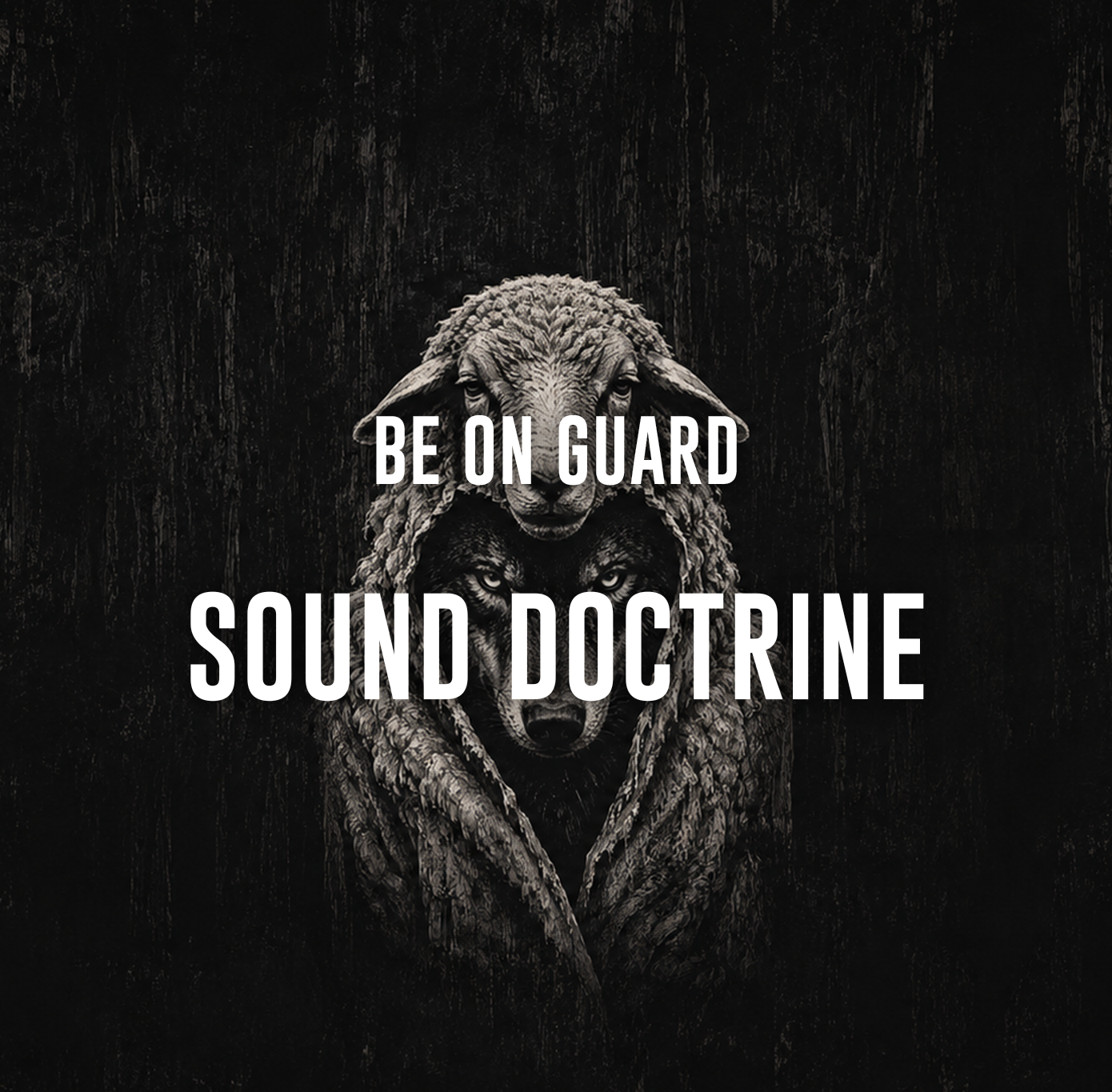
A study from “Be On Guard” 2026 Men’s Conference: Session 2 | Sean Tambagahan
Key passages: 1 Timothy 6:20–21 | 2 Timothy 4:1–5
1 Timothy 6:20-21
20 Timothy, guard what has been entrusted to you, avoiding irreverent and empty speech and contradictions from what is falsely called knowledge. 21 By professing it, some people have departed from the faith.
2 Timothy 4:1-4
I solemnly charge you before God and Christ Jesus, who is going to judge the living and the dead, and because of His appearing and His kingdom: 2 Proclaim the message; persist in it whether convenient or not; rebuke, correct, and encourage with great patience and teaching. 3 For the time will come when they will not tolerate sound doctrine, but according to their own desires, will multiply teachers for themselves because they have an itch to hear something new. 4 They will turn away from hearing the truth and will turn aside to myths. 5 But as for you, be serious about everything, endure hardship, do the work of an evangelist, fulfill your ministry.
How to use this study: Read each section with your Bible open. Look up the passages, consider the explanations, and work through the reflection questions. You can use it on your own or discuss it with others.
Big Idea
Christian unity matters deeply to God. So does the truth. We are called to love one another, resist unnecessary division, and guard the gospel entrusted to us. This study explores how those responsibilities fit together and how to practice discernment without becoming either careless about doctrine or quarrelsome over every disagreement.
1. Why sound doctrine matters
Doctrine simply means teaching. Christian doctrine concerns what Scripture teaches about God, humanity, salvation, and the life of faith. Sound doctrine is teaching that faithfully reflects God’s Word. Sound doctrine is critical in the everyday life of every believer.
In 1 Timothy 6:20–21, Paul tells Timothy to guard what has been entrusted to him and avoid teaching that falsely presents itself as knowledge. Timothy has received something of infinite and eternal value that he must preserve and pass on faithfully.
In 2 Timothy 4:1–5, Paul warns that people will seek teachers who tell them what they want to hear. The danger is real and personal: our desires can shape which teaching we welcome. We must ask whether we are allowing Scripture to correct us or selecting voices that confirm what we already want to believe.
The doctrines we believe shape the way we live whether we realize it or not. Titus 2:1–14 connects healthy teaching with self-control, godliness, good works, and hope in Christ. Knowing the truth should deepen our love for God and produce obedience.
2. The Dilemma: Unity & Separation
We are called to unity
On the night before His crucifixion, Jesus prayed for the unity of those who would believe in Him. (John 17:20–21)
Paul likewise urged the Corinthians to resist factions. (1 Corinthians 1:10)
Strife, jealousy, dissension, and division damage the church and contradict the life the Spirit produces. (Galatians 5:19–21)
We should care about the unity of Christ’s people more than winning arguments or protecting our own group. A denominational identity must never become more important to us than belonging to Christ.
We Are Also Called to Separate
Read: Romans 16:17–18; Titus 3:10–11; Matthew 10:34–39; Galatians 1:6–9; 2 John 9–11.
The same Bible that calls us to unity also tells us to reject false teaching. We cannot resolve that tension by ignoring either responsibility. Christian unity rests on belonging to Christ and receiving His truth.
When faithfulness brings division
In Matthew 10:34–39, Jesus warns that following Him may divide even a household. His point is that allegiance to Him must come before our closest relationships. We should pursue peace, but another person’s approval cannot become the condition of our obedience.
Galatians 1:6–9 addresses a distortion of the gospel. Paul insists that neither a respected teacher nor even an angel has authority to replace the message already received. A teacher’s charisma, popularity, or spiritual claims cannot make a false gospel true.
In 2 John 9–11, John warns against receiving teachers who abandon the teaching of Christ. In the setting of traveling teachers, hospitality could help support and spread their message. (The warning concerns participation in false teaching; it does not give us permission to treat unbelievers with contempt.)
Titus 1:10–14 and 1 Timothy 1:3–4, 19–20 likewise show that harmful teaching requires a response. Correction and discipline aim to protect people and call those in error back to faithfulness.
Romans 16:17–18 says that those creating division are doing so contrary to the teaching the church received. Sometimes defending truth protects unity, while tolerating error damages it.
What is Heresy?
Heresy is:
(1) The denial, doubt, or deliberate choice to reject a core, established doctrine of the Christian faith
(2) Any belief or theory that goes against the established doctrines of Christianity
Note of Caution and Pastoral Care: The word “heresy” requires care and discernment. An honest question, a season of doubt, an imprecise explanation, and a settled denial of Christian truth are all different experiences and expressions, and each requires a different pastoral response. A person can need correction without being a false teacher.
We should ask what someone actually believes, examine the teaching in context, and respond with patience. Second Timothy 2:24–26 calls the Lord’s servant to teach and correct with gentleness.
The principle: Pursue unity in the truth. Refuse teaching that overturns the gospel. Show humility and charity where faithful Christians disagree.
Heresy includes teaching that denies or fundamentally contradicts an essential doctrine of the Christian faith. It changes something central about who God is, who Jesus is, or the gospel through which we are saved.
This begs the question… What are the established doctrines of Christianity? What are the core teachings of the faith?
3. The essentials of the Christian faith
Read: Matthew 28:19; Romans 3:23–26; John 1:1–14; 1 Corinthians 15:1–4, 12–22; Ephesians 2:8–10; Hebrews 9:27–28.
The essentials are the foundational truths that give Christianity its identity. The following is a summary to guide study rather than an exhaustive doctrinal statement.
The existence and nature of God.
There is one God, eternally Father, Son, and Holy Spirit. God is the Creator, holy and sovereign. We receive His self-revelation rather than remake Him according to our preferences. See Matthew 28:19 and Isaiah 46:9–10.
The sinfulness of humanity.
We have sinned against God and cannot rescue ourselves through moral effort. Sin involves real guilt and separation from God; we need forgiveness and reconciliation. See Romans 3:23–26 and Ephesians 2:1–5.
The person and work of Jesus Christ.
Jesus is truly God and truly human. He died for our sins, was buried, and rose bodily from the dead. Our salvation rests on who He is and what He has accomplished. See John 1:1–14 and 1 Corinthians 15:1–4.
The necessity of faith for salvation.
Salvation is God’s gracious gift, received through faith in Christ rather than earned by our works. The life He gives produces good works as its fruit. See Ephesians 2:8–10 and Romans 5:1.
The resurrection and final judgment.
Christ will return, the dead will be raised, and God will judge. Our future hope and present accountability are grounded in these realities. See John 5:28–29 and 1 Corinthians 15:12–22.
The helpfulness of historic creeds
A creed is a concise statement of belief. The Apostles’ Creed grew out of early Christian confessions and summarizes belief in the Father, Son, and Holy Spirit, Christ’s saving work, forgiveness, resurrection, and eternal life. It was not written by the apostles themselves, but seeks to summarize their teaching.
The Council of Nicaea in AD 325 addressed controversy about the Son’s identity. The expanded creed associated with Constantinople in AD 381 is commonly called The Nicene Creed. It affirms the Son’s full deity and the deity of the Holy Spirit. The councils sought to defend the apostolic faith against teachings that contradicted it.
The creeds help us recognize that the Christian faith was entrusted to the church before us. They summarize biblical teaching; Scripture remains the authority by which we evaluate every statement of belief. Note: the word “catholic” in these creeds means universal, referring to the whole church.
The Apostles’ Creed
I believe in God, the Father almighty, creator of heaven and earth.
I believe in Jesus Christ, his only Son, our Lord.
He was conceived by the power of the Holy Spirit and born of the Virgin Mary.
He suffered under Pontius Pilate, was crucified, died, and was buried.
He descended to the dead.
On the third day he rose again.
He ascended into heaven, and is seated at the right hand of the Father.
He will come again to judge the living and the dead.
I believe in the Holy Spirit, the holy catholic Church, the communion of saints, the forgiveness of sins, the resurrection of the body, and the life everlasting. Amen.
The Nicene Creed
I believe in one God, the Father almighty, maker of heaven and earth, of all things visible and invisible.
I believe in one Lord Jesus Christ, the Only Begotten Son of God, born of the Father before all ages.
God from God, Light from Light, true God from true God, begotten, not made, consubstantial with the Father; through him all things were made.
For us men and for our salvation he came down from heaven, and by the Holy Spirit was incarnate of the Virgin Mary, and became man.
For our sake he was crucified under Pontius Pilate, he suffered death and was buried, and rose again on the third day in accordance with the Scriptures.
He ascended into heaven and is seated at the right hand of the Father.
He will come again in glory to judge the living and the dead and his kingdom will have no end.
I believe in the Holy Spirit, the Lord, the giver of life, who proceeds from the Father and the Son, who with the Father and the Son is adored and glorified, who has spoken through the prophets.
I believe in one, holy, catholic and apostolic Church.
I confess one Baptism for the forgiveness of sins and I look forward to the resurrection of the dead and the life of the world to come. Amen.
Three warning signs
Heresies often (1) lower God, treating Jesus or the Spirit as less than God; (2) elevate humanity, making us our own saviors; or (3) minimize sin, removing our need for repentance, forgiveness, or judgment. These are warning signs to investigate through Scripture, not a substitute for careful examination.
4. Frameworks
All doctrine matters, but not every doctrinal disagreement carries the same weight. Different frameworks can help us categorize doctrines so we can respond appropriately to different beliefs and the people who hold them.
Framework 1: Theological triage
(Adapted from Gavin Ortlund—Truth Unites)
Theological triage helps us assess a doctrine’s relationship to the essentials of Christianity. Triage means recognizing what requires the most urgent attention. This four-part framework helps us consider how closely a belief relates to the gospel and what its practical consequences may be.
The categories are a tool for discernment, not an inspired list. A topic can involve several levels of seriousness depending on the particular claim being made.
Read: 1 Corinthians 15:3–4; Romans 14:1–12; 2 Timothy 2:14–18.
Category A: Essential
Essential doctrines define the Christian faith. To reject them is to reject the faith itself. This is different from lacking understanding or needing help working through questions.
These truths belong to the foundation of the Christian faith. Denying them changes the identity of God, the person and work of Christ, or the gospel itself.
Examples include the Trinity, Christ’s deity and humanity, His death for our sins and bodily resurrection, and our need for God’s grace received through faith. We cannot affirm a denial of these truths as another equally valid expression of Christianity.
This does not mean a new believer must explain every doctrine with technical precision. We should distinguish limited understanding from rejecting what Scripture teaches.
Category B: Critical
Critical doctrines safeguard the essentials. Compromising them does not necessarily mean someone is not a Christian, but it places them on dangerous ground. In my experience, treating critical doctrines carelessly often opens the door to rejecting essential truths. We should take that danger seriously and address it before compromise deepens.
These convictions strongly shape how we understand and safeguard the essentials. Errors here can have serious consequences for faith and practice.
For example, our understanding of Scripture’s inspiration, truthfulness, and authority affects how we receive everything Scripture teaches. See 2 Timothy 3:16–17. Likewise, Christians can disagree about how divine sovereignty and human responsibility fit together without denying that God is sovereign or that people are accountable.
We should examine the specific belief and its implications rather than assume every disagreement about terminology is a rejection of the Bible.
Category C: Important
These doctrines significantly affect discipleship and how a church worships, leads, and ministers. Examples include baptismal practice, church government, the exercise of spiritual gifts, and men’s and women’s roles in church leadership.
Such disagreements may limit participation in a particular church or ministry role. They still require serious biblical study, even when they do not place someone outside the Christian faith.
Category D: Interesting
Some questions invite worthwhile study while allowing greater room for uncertainty. Examples include the identity of the Nephilim in Genesis 6 or details of an end-times timeline.
The label describes the particular question, not the worth of the passage. Christ’s return and the resurrection are essential; many details about the sequence of future events are debated. Any interpretation that undermines obedience or contradicts an essential requires closer attention.
Reflect: Have you treated a secondary disagreement as a test of salvation? Have you dismissed a consequential teaching as something that does not matter?
Framework 2: The rings of truth
(Adopted from Vance Pitman—Hope Church, Las Vegas)
The rings of truth help us distinguish foundational truth from secondary disagreements, personal convictions, and preferences.
Read: Romans 14:1–23; 1 Corinthians 8:1–13; Colossians 3:12–17.
Theological triage asks how much weight a doctrine carries. The rings of truth ask how we should hold and communicate our beliefs. The goal is to speak with the authority Scripture gives us while recognizing where our interpretation, application, or preference is involved.
Ring 1 Nonnegotiable truth
These are truths we must hold firmly because surrendering them would compromise the faith. We should teach them clearly and be prepared to explain their biblical foundation.
For example, Christ’s bodily resurrection is not an optional interpretation. Paul explains in 1 Corinthians 15 that our faith depends on it. The gospel sets boundaries that our desire for agreement cannot erase.
Ring 2 Negotiable truth (doctrinal disagreements among Christians)
These are matters on which believers who share the gospel reach different conclusions. Examples include church government, the continuation of particular spiritual gifts, and details of end-times interpretation.
Calling these matters “negotiable” does not mean truth changes or every position is correct. It means disagreement does not automatically place someone outside the faith. We can hold a conviction firmly, teach our understanding, and still recognize another believer as a brother or sister in Christ.
A church may also require agreement on some of these issues for its leaders or teachers. Recognizing someone as a Christian is different from agreeing that you can teach or lead together in every setting.
Ring 3 Personal convictions based on truth
These involve applying biblical principles to circumstances in which Scripture does not give every believer the same specific instruction. Examples may include choices about entertainment, food and drink, or particular household practices.
In Romans 14, Paul tells believers neither to despise nor condemn one another over disputed matters. We should act in faith, respect conscience, and consider how our freedom affects others.
Conscience does not make a clearly sinful action acceptable. But when Scripture permits freedom, we must be careful about turning our personal boundary into a universal command.
Ring 4 Preferences
These involve choices for which there may be several faithful options: service time, musical style, or clothing within the bounds of modesty and appropriateness.
Preferences deserve consideration, but they should not carry the authority of God’s commands. A preferred worship style is not a measure of another believer’s faithfulness. If a particular song teaches error, however, the concern has become doctrinal rather than merely stylistic.
Speak according to the kind of claim you are making
Ask: “Am I explaining what Scripture clearly teaches, presenting my interpretation, describing a personal conviction, or expressing a preference?” That question helps us avoid burdening others with rules God has not given and treating His commands as optional.
Reflect: What personal conviction or preference are you tempted to present as binding on everyone?
5. Practicing discernment in a local church
Read: Acts 2:42–47; Acts 17:10–12; Ephesians 4:11–16; Hebrews 10:23–25.
Discernment should help us become faithful members of Christ’s body. Constantly searching for a church that agrees with us about everything can keep us from the relationships, correction, and service through which God matures us.
At the same time, commitment to a church does not require accepting a false gospel or ignoring serious wrongdoing. We need sound reasons both for joining a church and for deciding that we must leave.
Four questions to ask about a church
Is the gospel preached?
Is Jesus Christ central? Is salvation proclaimed as God’s gracious gift through Christ, with a call to repentance and faith? See 1 Corinthians 15:1–4.
Are the Scriptures revered?
Does the church explain the Bible faithfully and submit its teaching and practices to Scripture? Can questions be examined openly from the text? See 2 Timothy 3:16–4:2.
Is sin addressed?
Does the church call people to repentance, practice appropriate accountability, and seek restoration with humility? See Galatians 6:1–2 and Matthew 18:15–17.
Is the church committed to Christ’s mission?
Are believers being equipped to make disciples, proclaim the gospel, and obey Jesus? See Matthew 28:18–20.
Understand what the church asks you to affirm
A statement of faith explains what a church believes. A church may distinguish the beliefs shared by all members from the fuller agreement expected of leaders or teachers. Understanding those expectations helps prevent confusion about membership, service, and teaching responsibilities.
When you disagree, first make sure you understand the church’s actual position. Read the relevant passages, ask questions respectfully, and consider whether you may be mistaken. Distinguish doctrinal concerns from relational hurt or disappointment about a preference. Seek counsel rather than making a major decision in isolation.
Search the Scriptures for yourself
The Bereans in Acts 17:11 received Paul’s message eagerly and examined Scripture to see whether it was true. Their example joins a teachable spirit with careful examination.
Choose one belief you need to study. Read the entire passage in context. Notice who is speaking, whom they address, and the point of the surrounding argument. Compare related passages. Then discuss your conclusions with a mature believer or pastor who can help test your understanding.
Studying for yourself does not mean studying entirely by yourself. God gives teachers to equip His people, and the whole body grows as we speak the truth in love. Our goal is understanding that leads to obedience, love, and stability in Christ.
Reflect: What would help you grow more rooted and useful in your church? Which belief will you examine carefully this week?
6. Our charge
Sound doctrine has been entrusted to us so that we will believe it, live by it, and pass it on faithfully. The response this study calls for is practical.
Fight for unity without compromising truth
Read: Ephesians 4:1–3, 11–16.
Make every effort to preserve unity among brothers and sisters in Christ. Be humble, patient, and willing to listen. Show charity where you disagree. Christian unity grows as we mature together in the truth and love of Christ.
Handle the Word faithfully
Read: 2 Timothy 2:15; Matthew 10:34–39.
Let Scripture correct your beliefs and challenge your preferences. Study carefully enough to explain what a passage actually teaches. Pursue peace, and accept that faithfulness to Christ may sometimes cost another person’s approval.
Know the truth and guard what you have received
Read: 2 Timothy 1:13–14.
Know what you believe and why. Hold firmly to sound teaching with the faith and love that belong to life in Christ. Depend on the Holy Spirit to help you remain faithful; guarding the gospel is not an exercise in self-reliance.
Contend for the faith
Read: Jude 3; 2 Timothy 2:24–26.
Have the courage to confront teaching that distorts who God is, what Christ has done, or how we are saved. Defend the faith with a desire for people to know Christ, and correct opponents with gentleness.
Do the work
Read: Acts 17:11; James 1:22–25.
Receive teaching eagerly and examine it carefully. Open your Bible, ask questions, and read in context. Then put what you learn into practice. Knowing more while refusing to obey is not the maturity Scripture calls us toward.
Choose one next step
A relationship where you need to pursue unity.
A belief you need to bring under the authority of Scripture.
A truth you need the courage to stand for.
A habit of studying the Word you need to establish.
Write down the step you will take, when you will take it, and who can help you follow through. Be on guard. Know the truth. Hold to it. Live it. Pass it on.